
Most advice on dispensary customer engagement centers on the brief time customers spend in-store: greeting them, training budtenders to ask effective questions, and keeping lines moving. While important, these actions do not impact customers once they leave.
The rest of the month is where the relationship is actually decided. A customer who hears nothing from you between visits is free to drift to the shop that’s two minutes closer or running a louder deal. That drift doesn’t show up in any report. It shows up months later as a regular you stopped seeing.
Engagement between visits is the job of the Retention Engine: the list you own, the messages that reach it and the automations that run without anyone remembering to send them, week after week.
What is dispensary customer engagement?
Dispensary customer engagement is how often your customers interact with your store between purchases: opening an email, tapping a text, redeeming an offer, coming back because a message gave them a reason. It’s measured by response, not by reach. A list of 10,000 that nobody opens is less engaged than a list of 2,000 that redeems every month.
It’s the step before visit frequency. Customers who engage with your messages come back more often, and customers who come back more often are where dispensary customer retention actually comes from. Engagement is the leading signal. Sales are the lagging one.
See how LeafSuite builds this into a weekly system for licensed dispensaries. → Retention Engine
Engagement starts at the counter
You can’t engage a customer you can’t reach. Every message strategy depends on one moment most dispensaries treat as an afterthought: the opt-in at checkout.
Most stores have a loyalty program that signs customers up for points. Far fewer make sure those same customers can actually be reached. Points without a phone number or email you’re allowed to message are a discount program, not a marketing channel.
The ask is usually the first thing to go on a busy shift. The budtender is checking IDs, tracking purchase limits and answering questions with a line behind the customer. And points that pay off weeks from now are a weak pitch to someone who just wants to check out.
The gap that leaves is bigger than most owners assume. On one account we run, only 18% of new loyalty members could be reached by text or email when we started measuring it. A budtender opt-in process with weekly tracking lifted that into the low 20s, and then it stalled there for five weeks. The week the owner reinforced the ask with the team, it jumped to 47%, and it stayed there the following week. Another store we work with runs at about 90%. Same loyalty platform at both. The difference is whether the ask happens every time.
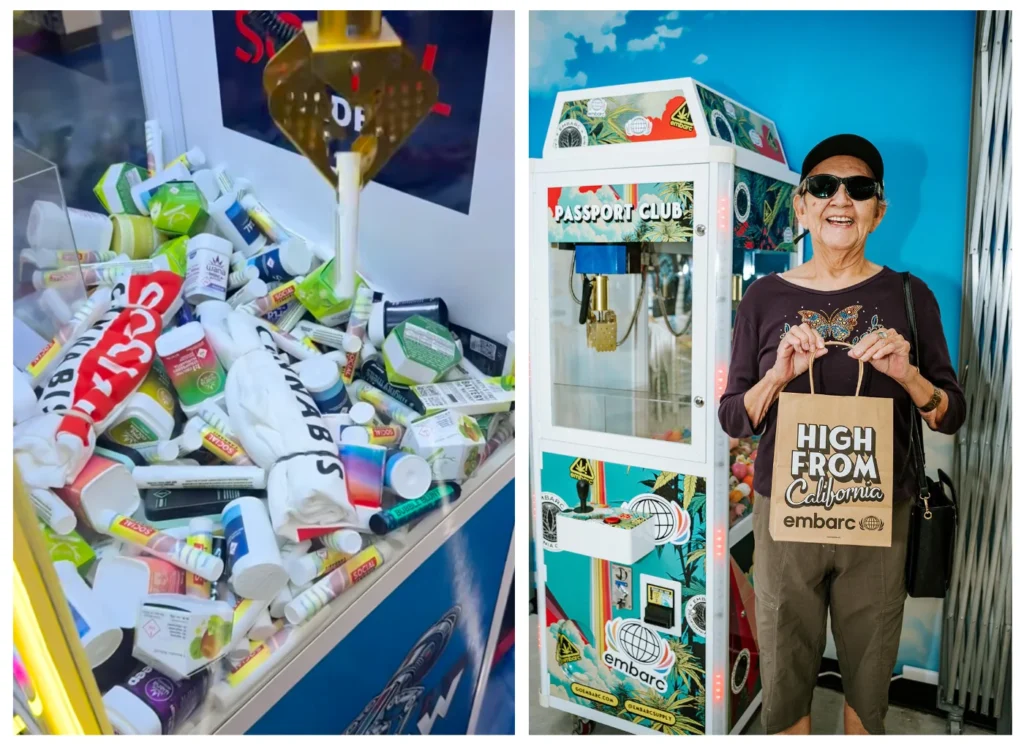
The other half is giving the customer a reason to say yes on the spot. One Colorado dispensary chain keeps a claw machine in its stores: sign up for the loyalty program and you get a turn. Customers spot it before they reach the register and ask how to play, so the opt-in stops being a chore the budtender has to remember and becomes the part of the visit people want. Check your state’s rules before you stock it. California, for one, bars licensees from giving away any cannabis, cannabis products or cannabis accessories as part of a promotion, so prizes there have to be things like discounts, bonus points or branded apparel.
This is also where the system connects. The Digital Dispensary Foundation makes sure the customer data lands somewhere you own, and the counter is where most of it comes from. A list that lives on your platform and grows every week is an asset. A list that depends on a third-party menu is rented.
The messages customers actually answer
Across the accounts we run, the same message tops the engagement chart again and again: the welcome. A customer who just joined is paying more attention to you than they ever will again, and a well-timed welcome catches that attention while it’s there. On one account, the welcome message brings in about $1,000 a month in attributed revenue from around 200 sends, four months running. That’s the best revenue per send of any automated message on the account.
Birthday messages behave the same way. On one account the birthday message is consistently one of the highest-engagement messages in the whole set. It’s personal, it’s expected, and it arrives on a date the customer already cares about.
What both have in common is relevance. The message centers on the customer, not the store’s inventory. The same rule explains the worst performers. On one account, a single send built for two different brand audiences at once posted the month’s weakest engagement and the most opt-outs. Each audience got a message that was half about something they didn’t buy. The fix was simple: one audience, one message. More on getting texts right in our guide to dispensary text marketing, and on the email side in cannabis email marketing for dispensaries.
More messages is not more engagement
The easiest way to wreck engagement is to send too much.
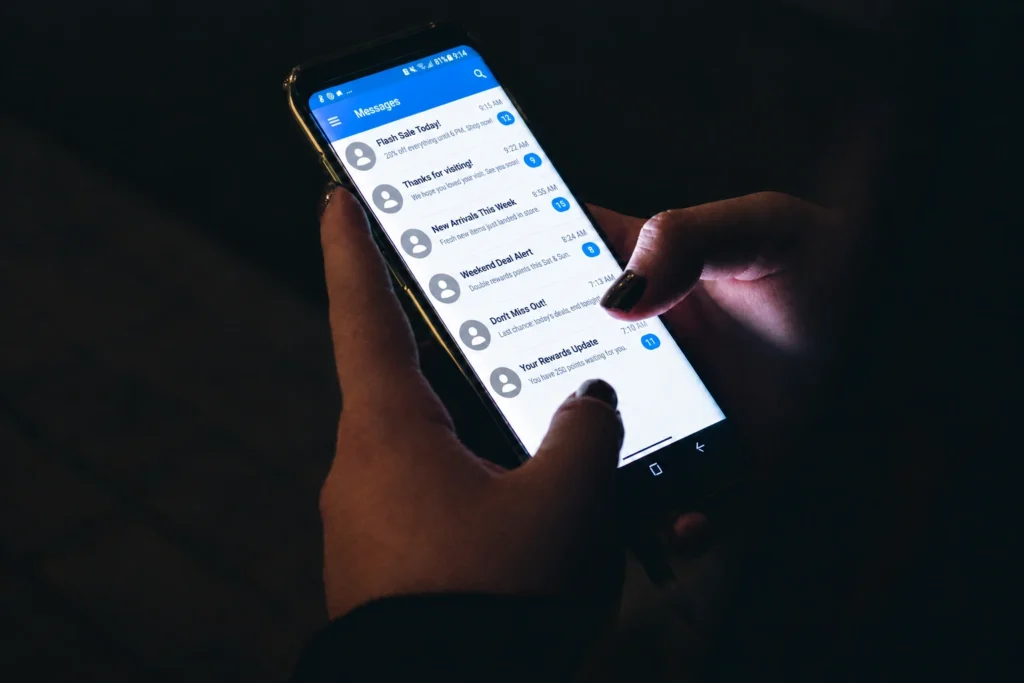
On one account, a post-visit automation was set to fire after every single visit, to every active customer. It ended up producing the large majority of all automated messages that month and used more credits than every other automation combined. Regulars were hearing from the store after every trip. The automation was rebuilt to reach only early-lifecycle customers, with a cap on how often any one person could receive it.
Cost and engagement are linked the same way. On another account, stripping the image out of the birthday text halved what each message cost to send. The flow’s results recovered on the cheaper version within a month. The image had been costing credits without earning visits.
The pattern underneath both: every message has to earn its place. A customer who learns that your texts are noise stops reading them, and that’s very hard to undo.
The automation that says “Enabled” and sends nothing
Here’s a failure we now test for every month, because it’s invisible from the dashboard. An automation can read “Enabled” in the platform and send nothing at all.
We’ve found first-purchase follow-ups stuck in that state: switched on, configured, and never once firing. The cause sat in how the automation’s trigger and audience fit together, not in the message itself, which is what makes it easy to miss. There was no error. Customers simply heard nothing at the most important moment in the relationship: right after their first visit.
That’s why the check isn’t “is it on?” It’s “did it send?” Every enabled automation should show sends every month. One that shows zero is broken until proven otherwise. The automations behind a strong dispensary loyalty program only work if they actually run.
How to measure dispensary customer engagement
Three habits keep the numbers honest.
Measure response, not sends. Open, click and redemption rates tell you whether customers are engaging. Send volume tells you only that you were busy.
Credit engaged revenue. Loyalty platforms usually report two revenue figures: one for everyone who bought after receiving a message, and one for customers who actually opened, clicked or redeemed. Anchor on the second. The first includes people who were walking in anyway. We go deeper on this in how to increase dispensary sales.
Watch the leading signals. The share of new customers you can actually reach, the share who make a second visit, and the number of enabled automations with zero sends. If the first two are rising and the third is zero, engagement is working. Sales follow.
Where engagement fits in the system
Engagement is the middle of the chain, not the whole of it. Local Demand Capture puts you in front of nearby customers searching right now. The Digital Dispensary Foundation turns those visits into contacts you own. The Retention Engine keeps those contacts engaged between visits, so a first sale turns into a weekly habit. Each engine makes the next one worth more, and the compounding growth comes from running all three, week after week.
Related: Vallejo Relief Center built a list of 4,000+ opted-in subscribers (2.3× list growth in 2 years) and now earns $11K+/month in Springbig-attributed revenue from it. Read the case study.
How many of your customers can you actually reach?
See how many customers are on your opt-in list, what messages they respond to and which automations have gone quiet.