Most cannabis social media marketing advice is written as if a dispensary were a coffee shop: post every day, run a few ads, watch the followers roll in. A dispensary can’t do half of that, and the half it can do doesn’t work the way it does for everyone else.
That gap costs real money. Owners and managers put hours a week into an Instagram account that reaches a slice of its followers, can be restricted without warning and holds no customer data the store can actually use. A year later the follower count is up and the business has nothing it owns to show for it.
Social still earns a place in a dispensary’s marketing. It just has a narrower job: keep the customers you already have interested, and move followers onto channels you own, week after week.
What cannabis social media marketing can’t do
It can’t buy you new customers. Meta’s advertising rules are explicit: ads may not promote or offer the sale of THC products or cannabis products with related psychoactive components. Boosting a post is buying an ad, so the paid lever every other local retailer pulls first is closed to you.
It can’t promise reach. Organic distribution on cannabis accounts is unreliable. A post can reach a fraction of your followers one week and almost none the next, and you will rarely be told why.
It can’t be counted on to stay. Accounts get restricted or removed, sometimes with little explanation and slow recourse. Everything built inside the platform goes with them: the followers, the history, the audience you spent years earning. You never owned any of it.
That’s why we treat social as a supporting channel, not the foundation. We made the same case in dispensary internet marketing: the channels a dispensary owns are the ones that compound.
See how LeafSuite builds this into a weekly system for licensed dispensaries. → The Dispensary Momentum System
What it does well
Take paid reach off the table and social still does three things well.
It shows the store is alive. A new drop on the shelf, a vendor day, a budtender’s pick for the weekend. Customers who already know you see a reason to come back this week instead of next month.
It gives the store a personality. People choose between dispensaries on more than price. Faces, voice and a sense of who works there are hard to fake, and social is where customers see them.
It’s where customers check you out. Before a first visit, plenty of shoppers look up the store’s Instagram the way they’d look up its reviews. A dead or messy profile tells them something before they walk in.
None of that needs a big audience. It needs consistency, and it works best on the people who already buy from you.
Your social profile is also a listing
Here’s a part most dispensaries miss. A Facebook page isn’t just a feed. It’s a business listing, with a category, an address and hours, and it sits alongside your Google Business Profile and directory listings as one more place the internet describes your store.
On accounts we’ve taken over, the Facebook page has been filed under the wrong business category, and on one it carried no address at all. Nobody had looked, because nobody thinks of the Facebook page as a listing. The store’s posts were fine. The record underneath them was wrong.
The fix isn’t complicated, but it has to be deliberate: the profile’s category, address and hours should match your Google Business Profile exactly, and your website should point to the profiles you actually run. That consistency is part of how Local Demand Capture works. More on the profile that matters most in how to optimize your dispensary Google Business Profile.
Every post should move someone off the platform
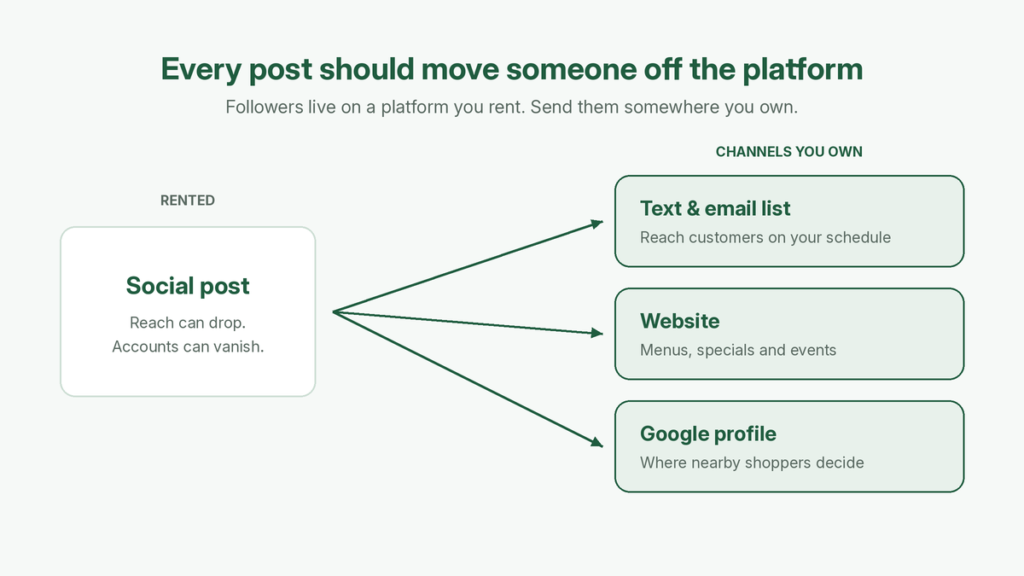
If the account can disappear, the goal of every post is to get the follower somewhere it can’t. In practice that means three destinations.
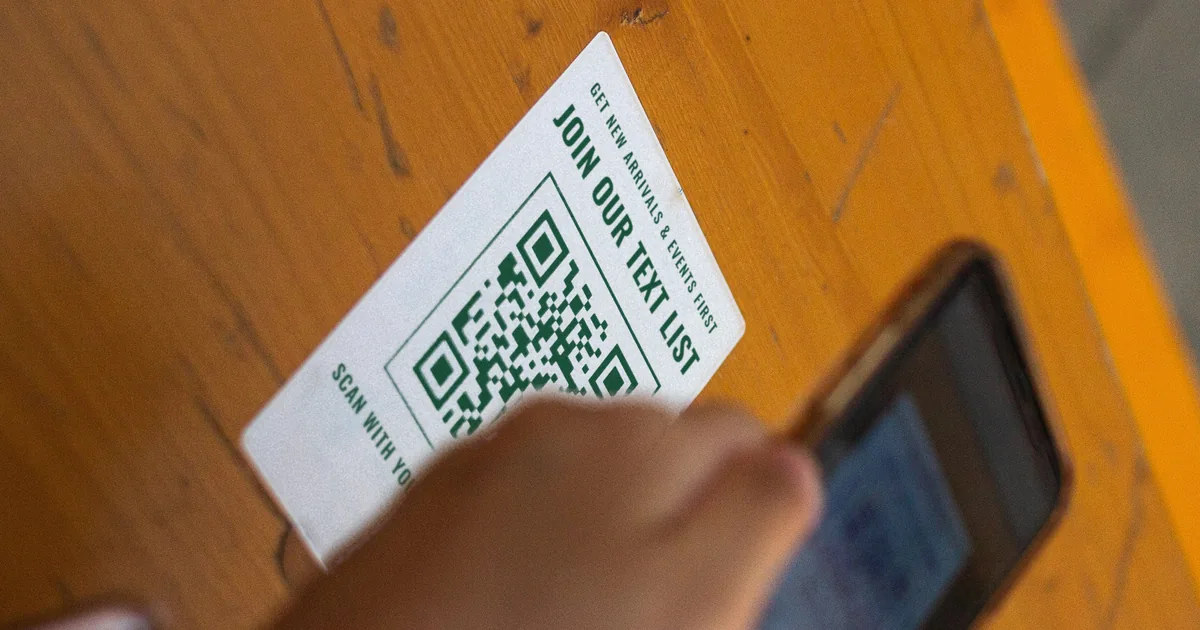
- Your text and email list. A follower who joins your list is a customer you can reach on your schedule, not the algorithm’s. This is where the Retention Engine takes over.
- Your website. Menus, specials and events should live on a site you own, with social pointing to them, not the other way round.
- Your Google profile. Search is where nearby customers decide where to shop. Social that sends people there strengthens the channel that brings in new customers.
Measure the move, not the audience. Followers is a number the platform owns and can take back. The number that matters is how many of those followers ended up somewhere you control. Track list sign-ups that came from social, and clicks from your profile to your site. If followers climb and sign-ups don’t, the account is entertaining people, not building anything.
A weekly rhythm that feeds the system
Social works for a dispensary when it runs on a steady rhythm rather than bursts of effort. A simple week looks like this:
- A reason to visit: what’s new, what’s back, what’s happening this week.
- A face: a budtender, a vendor, a regular moment in the store.
- An invitation: join the text list, see the full menu, read the guide on the website.
Check your state’s rules before you post. Some cannabis advertising rules apply to social content too, not only to paid ads, and they differ from state to state.
Three posts that move people beat ten that only fill the grid. The ones that matter are the ones that move a follower onto your list, your site or your Google profile, where the relationship is still there next month.
Where social fits in the system
Social sits at the edge of the Dispensary Momentum System, not the center. The Digital Dispensary Foundation gives your posts somewhere to send people: a fast site with a menu and a sign-up you own. Local Demand Capture turns local searches into first visits. The Retention Engine keeps those customers coming back with messages they actually answer. Social feeds all three. On its own, it rents attention. Connected to the system, it turns that attention into customers you can reach again.
If you want to see what consistent, owned-channel work looks like over a year, how to increase dispensary sales covers the customers you already have, and cannabis marketing SEO covers why search has to anchor the plan.
Related: Vallejo Relief Center built a list of 4,000+ opted-in subscribers (2.3× list growth in 2 years) and now earns $11K+/month in Springbig-attributed revenue from it. Read the case study. Theo in New Jersey went from 15 to 41 #1-ranked keywords in 13 months, with Google impressions up 375% year over year. Read the case study.
Want to know where your followers really end up?
See which channels your dispensary controls and where customers are slipping away.