
Every local business wants to rank on Google. But if you run a cannabis dispensary, the rules are different and the stakes are higher. The same playbook that works for a plumber or a pizza shop will leave your dispensary invisible, penalized by state regulators, or stripped of your license entirely. Here’s what actually sets dispensary SEO apart.
The Platform Restriction Problem
For most local businesses, Google is the biggest amplifier available. Google Ads, Google Business Profile categories, Google Shopping — all of it is accessible. Dispensaries operate in a different reality.
Google Ads remains largely off-limits for cannabis products across most U.S. markets, with narrow exceptions that vary by state and product type. That means dispensaries compete in organic search without the paid amplification that every other local business takes for granted.
Without paid amplification, organic search isn’t just one channel — it’s often the primary acquisition engine. That means the margin for error on technical SEO, content, and local signals is essentially zero.
Platform Access: Dispensary vs. Standard Local Business
| Platform / Channel | Standard Local Business | Cannabis Dispensary | Notes |
|---|---|---|---|
| Google Ads | Full access | Restricted | Cannabis product ads prohibited by Google policy |
| Meta Ads (FB/IG) | Full access | Restricted | Cannabis promotion violates Meta commerce policy |
| Google Business Profile | Full access | Restricted | No product catalog; categories are limited |
| Yelp | Full access | Restricted | Ads limited; listings often suppressed in search |
| Weedmaps / Leafly | N/A | Available | Cannabis-specific directories — can be expensive, low-ROI |
| Organic Google Search | Full access | Available | Requires compliant content — core battleground |
Compliance Makes Content Strategy Radically More Complex
A standard local business can write whatever copy converts. A dispensary must write copy that converts and stays compliant with state advertising regulations, which vary significantly by market.
Common content restrictions dispensaries navigate:
- No health or medical claims — phrases like “relieves anxiety” or “treats insomnia” can trigger regulatory violations in most states.
- Age-gating requirements — websites often must verify visitor age before displaying product information.
- Potency and pricing display rules — some states restrict how THC percentages or promotional pricing can be displayed online.
- No targeting minors — this affects keyword choices, image selection, and even which neighborhoods you can target with local content.
- Testimonial restrictions — customer reviews that include health claims can expose the dispensary to regulatory risk.
The hidden SEO cost: Many high-volume keywords are effectively off-limits unless content is structured in an educational, compliant way, which is why dispensary SEO skews heavily toward informational, strain-based, and educational content rather than direct conversion copy
The Local Citation Landscape Is Completely Different
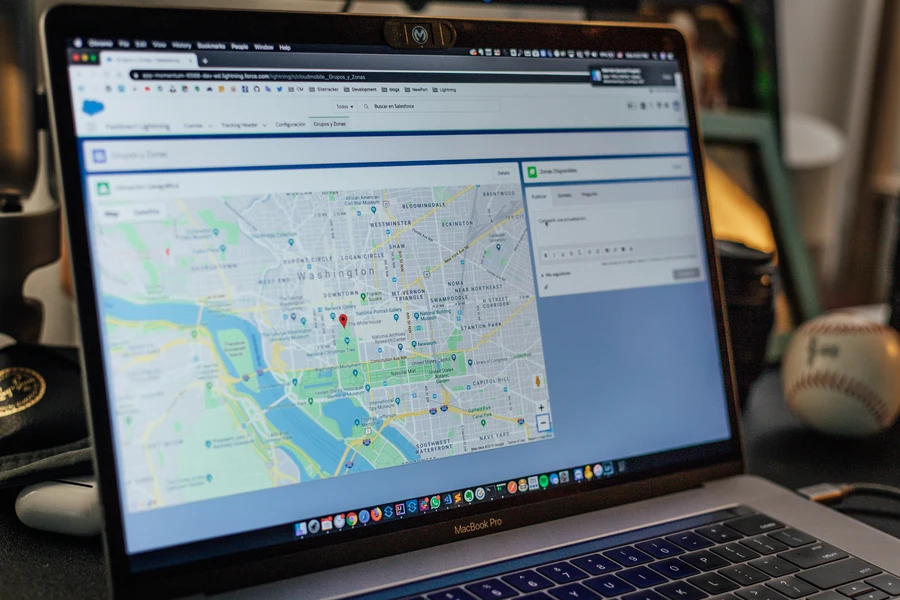
Standard local SEO builds authority through citations on Google, Yelp, TripAdvisor, Apple Maps, and industry directories. For dispensaries, that universe shrinks and shifts.
| Citation Source | Standard Local Business | Dispensary |
|---|---|---|
| Google Business Profile | High impact | Medium — restricted categories |
| Weedmaps | N/A | Critical |
| Leafly | N/A | Critical |
| iHeartJane | N/A | High impact |
| Yelp | High impact | Low — frequent suppression |
| State License Directories | N/A | High impact |
| Apple Maps / Bing Places | High impact | Available but inconsistent |
Dispensaries must build authority inside cannabis-native platforms, not general directories alone. Those platforms have their own rules for NAP consistency, menu sync, and review policies that a standard local SEO vendor typically has no experience navigating.
Keyword Strategy: Intent Is Layered Differently
For a standard local business, most keywords map to a simple intent: find the place, call, visit. Dispensary search behavior is more layered — and the highest-volume terms are often the most legally sensitive.
How dispensary keyword tiers break down:
- Navigational —
dispensary near me,[city] dispensary. High intent, high competition, compliant to rank for. - Product-based —
buy indica flower [city],RSO oil dispensary. Medium intent, moderate compliance risk depending on state. - Condition-adjacent —
cannabis for sleep,THC vs CBD for pain. Huge search volume, but content must be structured as education, not medical advice. - Deal/promo —
dispensary deals [city],first time customer discount. High converting, heavily regulated in copy. - Strain-specific —
Blue Dream effects,Gelato strain review. Lower competition, highly qualified traffic, generally safe to target.
Key insight: Many agencies over-focus on navigational keywords, but dispensary growth often comes from educational + strain-based search traffic, where competition is lower and intent is still high.
Reviews: More Strategic, Higher Stakes
Every local business needs reviews. But for dispensaries, the review strategy extends across multiple platforms simultaneously — each with different policies about what reviewers can say.
- Google Reviews — subject to removal if they reference specific medical or health outcomes. A high volume of health-claim reviews can flag the GBP listing.
- Weedmaps Reviews — Cannabis-specific, more permissive, and heavily weighted by dispensary-discovery users.
- Leafly Reviews — Tied to specific products, not just the location. Product-level reviews require an active, synced menu.
- Review velocity matters more — because overall volume is naturally lower than restaurants or retail, a consistent cadence of new reviews has outsized impact on ranking.

The Technical SEO Layer: Menu Sync and Schema
Most local businesses have a static services page. Dispensaries have a live product menu that changes daily — sometimes hourly. This creates a technical SEO challenge that simply doesn’t exist for standard local businesses.
Key technical requirements unique to dispensaries:
- Menu platform integration — whether using Dutchie, Jane, or a custom POS API, menu data needs to be structured and indexable without relying entirely on JavaScript rendering.
- Product schema markup — Product, Offer, and Item Availability schema help Google understand inventory, pricing, and availability without requiring a paid Shopping listing.
- Age-gate implementation — must be done in a way that doesn’t block Googlebot, or the entire site becomes unindexable.
- Subdomain vs. subdirectory for menus — menu platforms often live on a separate domain. This means link equity and crawl authority built on the main domain doesn’t transfer to where conversions actually happen.
- Multi-location architecture — single-state dispensary groups often need separate location pages with unique content for each store, without triggering duplicate content penalties.
The Bottom Line
Standard local SEO is a known discipline with well-established playbooks. Dispensary SEO borrows the fundamentals — NAP consistency, local citations, on-page optimization — but operates inside a compressed channel environment, against compliance constraints, with a citation ecosystem most agencies have never touched, and a technical architecture that changes every time inventory does.
The dispensaries that win in organic search aren’t the ones who hired a general local SEO agency. They’re the ones who treated compliance, content, and technical infrastructure as a unified system and built it deliberately.
What this means for your dispensary: Before evaluating any SEO vendor, ask them three questions directly: How do you handle age-gate implementation without blocking Googlebot? Which cannabis-specific citation sources do you prioritize and why? What’s your framework for condition-adjacent content compliance? The answers will tell you immediately whether they’ve done this before or whether you’d be their first dispensary client
Not Sure If Your SEO Strategy Is Built for Compliance?
A dispensary marketing audit shows you exactly where your organic strategy falls short.