Most dispensary CRM advice is a software comparison: which platform segments best, which one texts, which one plugs into your POS. Those questions matter. They skip the one that decides whether any of it pays: are the customer records inside your CRM complete, connected and yours?
A CRM is a list of people plus everything you know about them. If a purchase never reaches the right profile, the best segmentation on the market is sorting the wrong data. Here’s what a dispensary CRM has to hold, where the records quietly break, and what to check before you pay for another platform.
What a dispensary CRM actually does
In most dispensaries the CRM is the loyalty platform, sometimes the customer module inside the POS. Its job is to tie each customer’s phone number or email to their purchase history, keep track of what they’ve agreed to receive, and let you message them based on what they actually do. Points and rewards ride on top of that record. If that sounds like a loyalty program, it is, and the loyalty program best practices still apply.
Three connections decide whether the record is any good:
- The register, where most purchases happen
- The website and online menu, where more and more orders start
- The old list, from whatever you used before your current platform
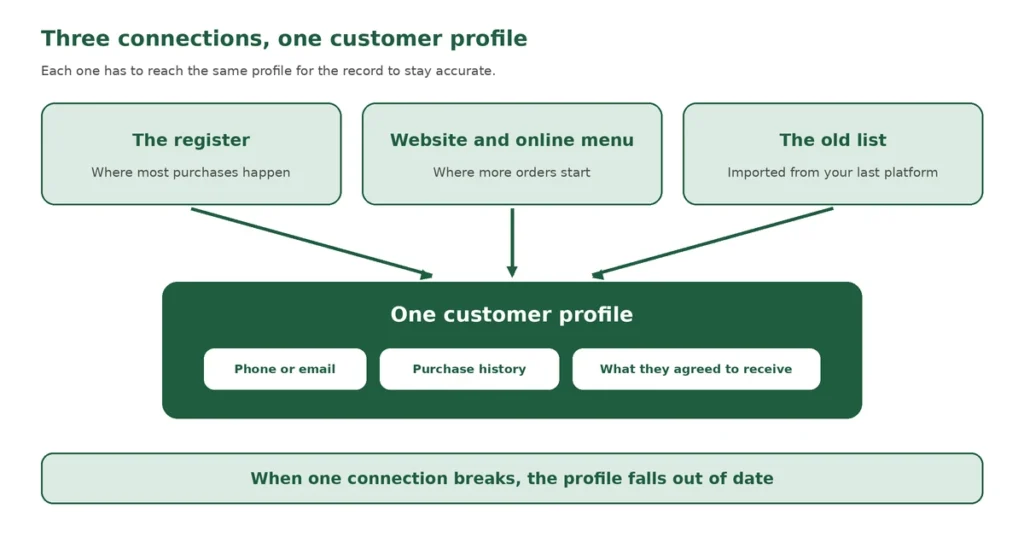
When all three feed the same profile, the CRM can tell a regular from a first-timer from someone who hasn’t been back since spring. When one of them leaks, it can’t, and it won’t tell you it can’t.
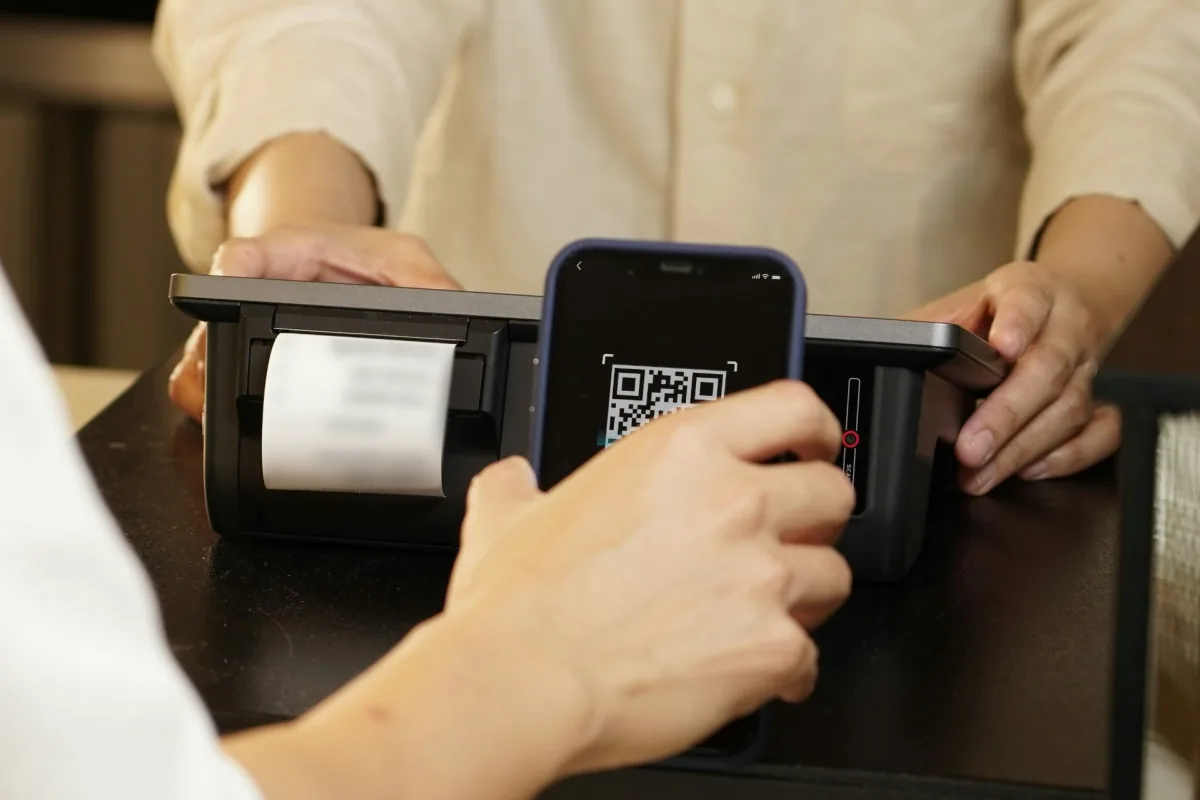
The connections also decide what customers can do with their rewards. Where the loyalty platform and the register only meet at the counter, a reward is pulled up on the customer’s phone and applied by hand, and online orders can’t use it at all.
See how LeafSuite builds this into a weekly system for licensed dispensaries. → Digital Dispensary Foundation
Where dispensary CRM data breaks
These three come from opening the data on accounts we run. None of them showed up as an error message.
The old list that never connected
When a dispensary moves to a new loyalty platform, the email list from the old tool usually comes along as one bulk import. On the accounts we run, those imported records arrived with an email address and little else: no store, no sign-up method, and no link to a loyalty account. So when one of those customers bought something, the purchase never reached their record. Opens and clicks still counted. Visits and revenue didn’t.
On one account, those imports were about a quarter of the emailable addresses in the “new members” audience. On another, about one in eight. Every campaign sent to that group looked a little worse than it was, by an amount nobody could see from the dashboard.
The segment that wasn’t what its name said
On one account, an audience called “New Members (No Purchase Yet)” held close to 3,000 profiles. When we exported it, 86% were tied to the store, and about two-thirds had joined in the two years before the platform switch. Most were likely past customers who hadn’t been back, not new sign-ups waiting on a first purchase.
That changes what you say to them. A welcome message to someone who has shopped with you for two years reads like you don’t know them. It changes the numbers too. On another account, widening the weekly newsletter to that kind of mixed group earned $0.06–0.29 per person against $0.41–0.70 on the core list, and drew 25 opt-outs against 10.
Online orders landing in someone else’s analytics
The third leak sits between the website and the online menu. On one account, the dispensary’s site and its online shop reported to two separate Google Analytics properties. The shop’s went to a property the menu provider controls and wouldn’t share. A customer who arrived from Google lost their source the moment they reached the shop, and the dispensary’s own analytics recorded no ecommerce events and $0 in revenue over the four weeks we checked. It wasn’t a one-off. We’ve found online orders reporting to the provider’s tracking instead of the dispensary’s elsewhere too.
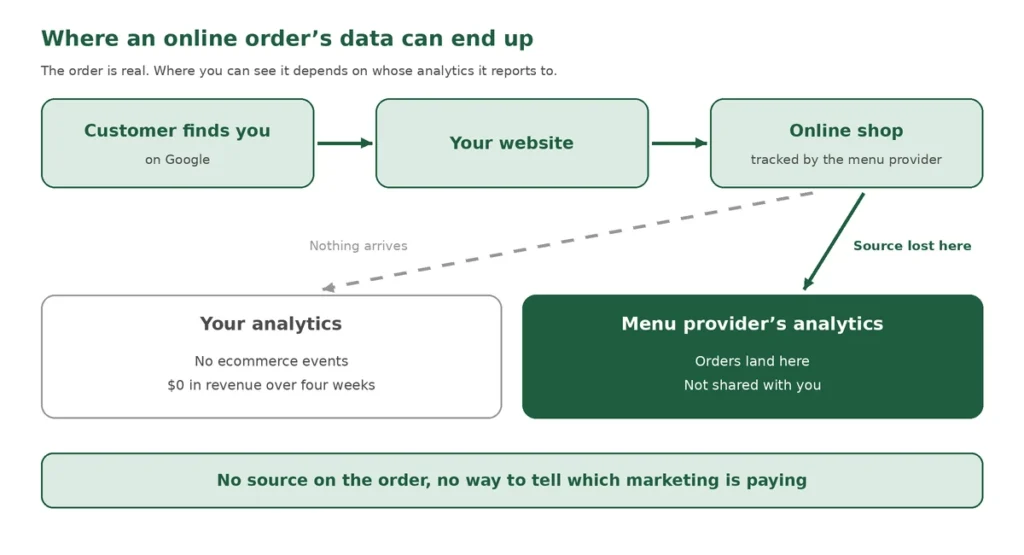
That matters beyond reporting. If you can’t see which online orders came from search, you can’t tell which marketing is paying, and the data that would tell you belongs to a vendor. It’s the same problem we covered in why menu providers shouldn’t be your whole website strategy, one layer down.
How to check your dispensary CRM before buying another one
Most of these leaks get blamed on the platform, and the fix usually offered is a new one. A migration with the same plumbing carries the same leaks across, plus a fresh import. Five checks, none of which need new software:
- Export your full customer list. If you can’t pull every record, with purchase history and consent status, whenever you want, it isn’t your list.
- Find your imported records. Sort by join date around your last platform switch. A batch that arrived on one day with no store attached is worth a closer look.
- Read your segments, not their names. Export the audience you message most and check its join dates and store links against what the name promises.
- Follow an online order. Start from a Google result, place an order, and confirm it shows up in analytics you own with its source intact. Your online menu should be part of your store’s data, not a separate one.
- Compare campaigns per person, not in total. A bigger audience always produces bigger totals. Revenue and opt-outs per person show whether you sent to the right people.
If the platform fails a specific question after that, the five questions for judging a loyalty platform are the place to start the comparison.
Where the CRM fits in the system
The Dispensary Momentum System treats the customer record as infrastructure, not a feature of whichever app holds it. The Digital Dispensary Foundation connects your website, online menu and analytics that you own, so online orders keep their source and your list stays exportable if a contract ends. That’s part of what dispensaries actually need from a website. Local Demand Capture brings in the first-time customers who become new records. The Retention Engine works those records week after week, on whichever loyalty platform you already use, which is why the opt-ins collected at the counter matter as much as the software holding them.
A new CRM can be the right call. But the records you already have usually tell you something a software comparison won’t, and they’re worth reading first.
Related: one dispensary we work with came to us with a slow, menu-dependent site. After the Digital Dispensary Foundation build, its Google PageSpeed score moved from 55 to 92, and the site stopped being the reason customers dropped off.
See What Your Customer Data Is Missing
A dispensary marketing audit shows which sales reach the right customer, where online orders get counted and what your messages really earn.