Most conversations about dispensary branding start with a logo. Your customers rarely meet the logo first. They meet your name in a Google result, your hours on a listing, your menu, a text on a Thursday afternoon. When those agree, the brand reads as a store that has its act together. When they don’t, it reads as a store you can’t quite trust, and Google notices the same gaps your customers do.
For an independent dispensary, branding is mostly a consistency job. Here’s where your brand actually lives, why Google reads it as closely as your customers do, and how to keep it matching week after week.
Where customers actually meet your brand
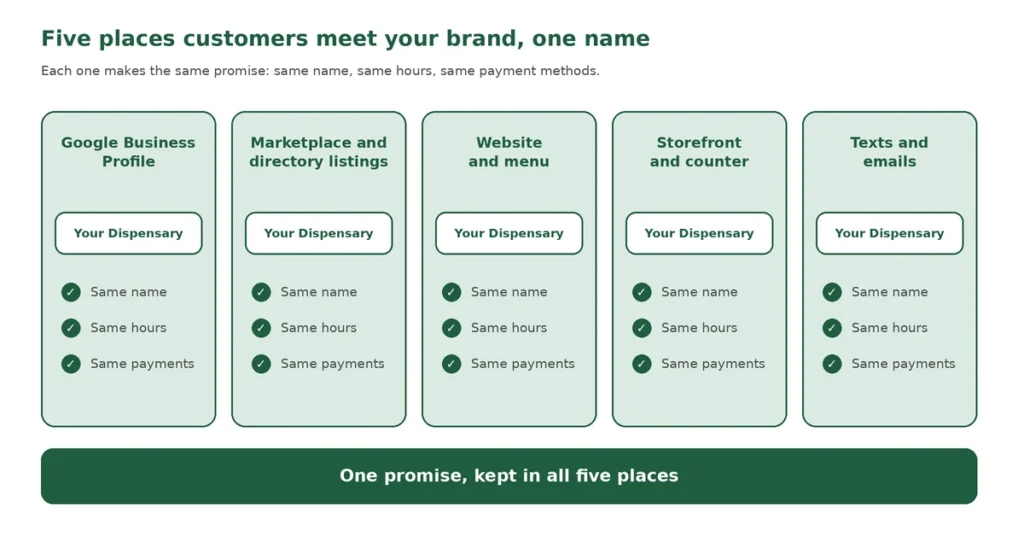
Cannabis advertising rules narrow the channels most retailers lean on for brand awareness. New York’s restrictions are a good example of how specific they get. So the places a customer already looks carry more of your brand than they would for a coffee shop or a boutique:
- Your Google Business Profile: name, hours, photos, payment methods and reviews
- Marketplace and directory listings
- Your website and menu
- The storefront and the counter
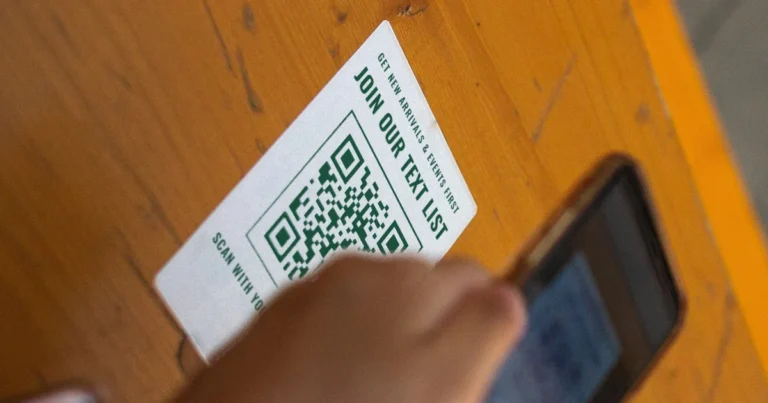
- The texts and emails you send
None of these is a logo. Every one of them is a promise about what the customer will find when they show up. Dispensary branding works when all five make the same promise.
See how LeafSuite builds this into a weekly system for licensed dispensaries. → Digital Dispensary Foundation
Google reads your dispensary branding too
Google’s own guidelines for Business Profiles tell you to represent your business “as it’s consistently represented and recognized in the real world across signage, stationery, and other branding.” Your listing’s name should match the name on your storefront and your website. Adding anything else to it isn’t permitted and can get the profile suspended.
That rule shows up in real accounts.
One dispensary we work with had a category word tacked onto the end of its name on Google. It wasn’t the name on the door, and it wasn’t the name customers used. We set the listing back to the real name during a profile overhaul this September, and its map rankings held through the change. The extra word had been doing nothing except putting the listing out of step with the store.
Another showed us how much the name itself can matter. This dispensary runs delivery, and it couldn’t break into the map pack for a “weed delivery near me” search. The obvious explanation was the profile category. It turned out to be the name. Every business ranking in that pack had “weed” in its Google name. Competitors with the exact same category setup ranked because their names carried the word. One with no delivery category at all ranked second on its name alone. A few of the listings used lookalike characters in their names, which is a spam tactic, not a strategy.
There was no honest fix. Adding a keyword to a Google name breaks the guidelines, and the shop’s real name doesn’t contain the word. The lesson is for the next store, not this one: your name is a decision Google will read for as long as you’re open. If you’re opening a location or planning a rebrand, make that decision knowing it. And check Google’s rebranding rules before the new sign goes up. A minor name change can be edited on the existing profile, but a change to the proper nouns in your name counts as a new business, with the old profile marked closed.
The details that drift
Name problems are rare. Small mismatches are not. They creep in every time something changes in one place and not the others.
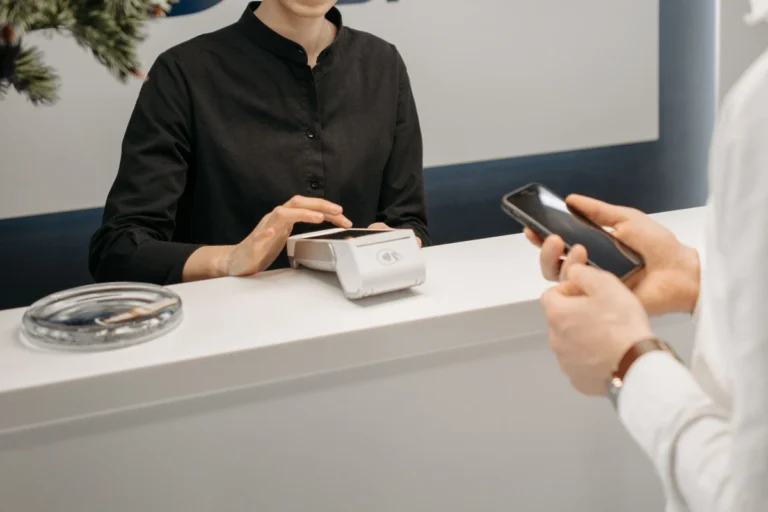
Payment methods are a good example, and one we keep finding. On one account, the business record used for its directory listings said cash and ATM, while its Google listing said credit and debit cards. On another, Google showed debit cards only, while the website listed cash, debit, credit and ACH. None of this looks like a branding problem. But a customer who reads the wrong one finds out at the register, and that’s the moment your brand is being judged.
It happens on websites too. We caught one homepage showing two different star ratings a scroll apart. Small, easy to fix, and exactly the kind of detail a skeptical first-time customer notices.
Hours, holiday closures, menu links and payment options drift the most, because they change the most. Every change is a chance for one surface to fall behind the rest.
Your website is the one brand surface you fully own
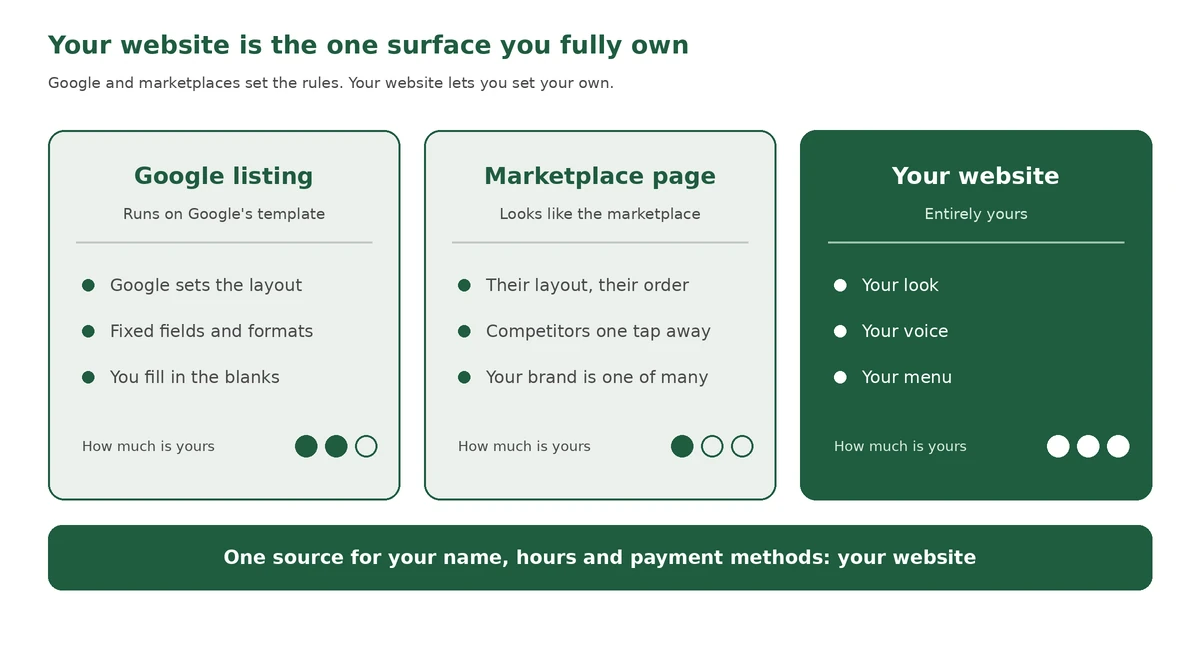
Your Google listing runs on Google’s template. Your marketplace pages look like the marketplace, with your competitors one tap away. Your website is the only place where the look, the voice and the menu are entirely yours.
That’s why we treat the site as the brand’s home base. It should be fast, easy to order from and clearly yours, which we covered in what dispensaries actually need from a website. It shouldn’t hand your brand to a menu provider, which is the argument in why Dutchie, Jane and Weedmaps shouldn’t be your whole website strategy. And the menu deserves to feel like part of your store, not a bolt-on, which is where cannabis ecommerce for dispensaries picks up.
It’s also the reference point for everything else. When your site carries the correct name, hours and payment methods, every other listing has one source to match.
Keep it matching week after week
Brand consistency isn’t a one-time project. It erodes through ordinary weekly work: a new specials graphic, a holiday hours change, a text written in a hurry. A short routine catches most of it:
- One name, used identically on the storefront, website, Google and every listing
- One set of hours, updated everywhere the same day it changes
- One list of payment methods, matching what the register actually takes
- Photos on your Google listing that look like the store a customer will walk into
- Texts and emails that sound like your budtenders, not a template
The Dispensary Momentum System is built to make that routine automatic. The Digital Dispensary Foundation gives your brand a home you own, along with the customer data behind it. Local Demand Capture keeps your Google listing and directory listings matching that home, and earning the reviews and photos that win the local pack. The Retention Engine sends texts and emails that look and sound like your store. And the design work behind all three applies your brand every week, so the specials graphic and the in-store flyer match the site.
A new logo can be a good investment. But for most independent shops, the brand customers judge is the one they meet before they ever see it.
Related: one dispensary we work with came to us with a slow, menu-dependent site. After the Digital Dispensary Foundation build, its Google PageSpeed score moved from 55 to 92, and the site stopped being the reason customers dropped off.
Does Your Brand Match Everywhere a Customer Looks?
Find out in one audit. Check your name, hours and payment methods on Google, your listings and your website. See what’s out of step.